Age fit
A youthful line may not suit every person or every long-term hair loss pattern.
Aesthetic planning
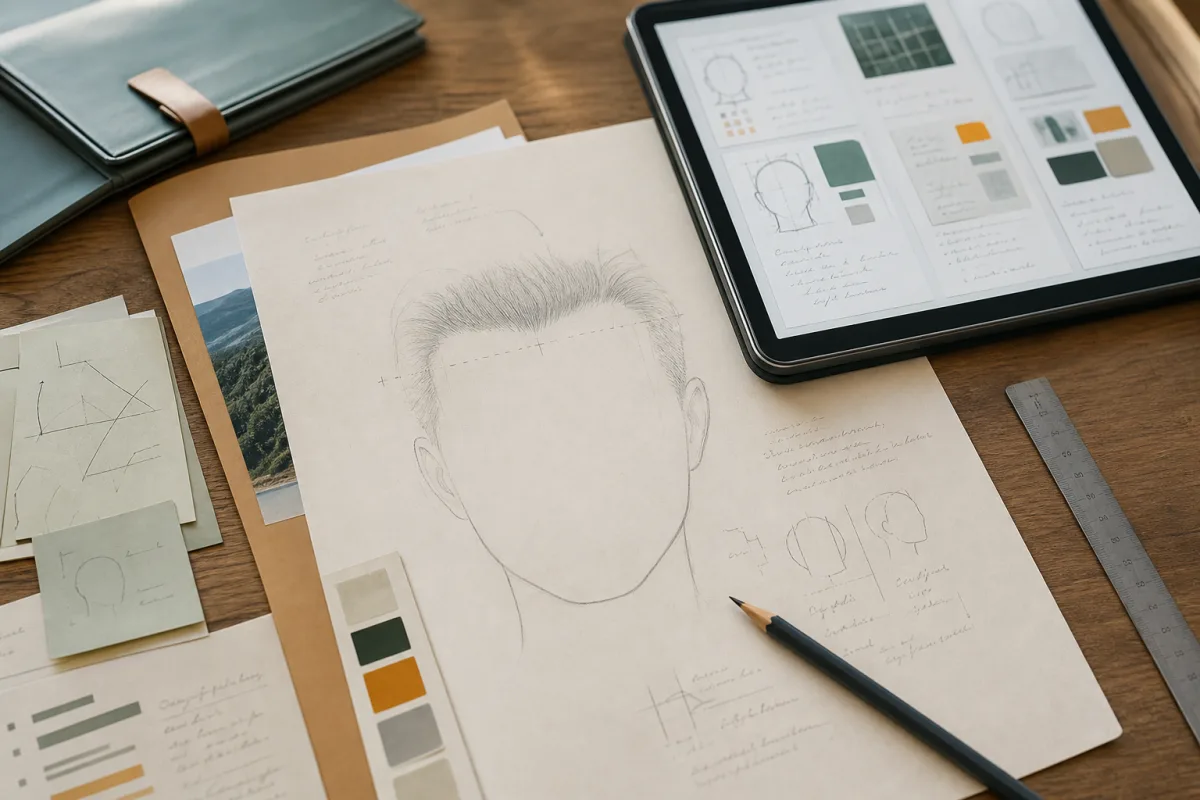
Mark's hairline design guide explains why a natural-looking plan depends on more than drawing a low line across the forehead.
First principle
Mark learns that hairline design is part of the wider treatment plan. It connects to donor area limits, native hair, future hair loss, age and face shape.
The most useful consultation explains why a hairline shape is being considered, what trade-offs exist and how the plan may age over time.
Design factors
A youthful line may not suit every person or every long-term hair loss pattern.
Hairline design should be reviewed in relation to the face, not isolated from it.
Hair calibre, colour, styling and lighting can affect how dense a result appears.
Long-term view
Mark would ask whether the proposed hairline uses grafts responsibly and whether the clinic has discussed future hair loss. This connects directly to donor area planning.
A careful clinic conversation should make expectations more realistic, not simply more exciting.
Will this hairline still make sense if my native hair changes later?
Review questions
This guide does not choose a hairline. It helps readers prepare better questions for qualified professionals and clinic research.
Common questions
Hairline design affects naturalness, long-term appearance and graft planning, so it should be discussed carefully with qualified professionals.
No. It only explains questions to ask before professional consultation.
Hairline notes
Hairline planning is both aesthetic and medical. Mark wants a design that respects face shape, age and donor limits.
A very low hairline can use more grafts and may age poorly. Mark asks how the proposed line fits long-term planning.
He asks how density is balanced across the frontal area, mid-scalp needs and donor preservation.
Mark wants time to review the proposed design, ask questions and understand changes before consenting.